Office cleaning in Calgary focuses on maintaining safe, functional, and hygienic work environments through consistent care of shared surfaces, floors, restrooms, and common areas. Workplaces in Calgary experience seasonal moisture, tracked in debris, and high shared surface use, which increases the need for structured cleaning routines. Eshine Cleaning Services provides office cleaning designed around how offices are actually used, not industrial or post construction conditions.
Professional Office Cleaning Services
Professional office cleaning covers routine maintenance of workspaces, shared facilities, and employee areas to control soil buildup, surface contamination, and material wear. The service is built around predictable tasks performed at defined intervals, rather than occasional deep cleaning.
Scope typically includes workstations, meeting rooms, reception areas, restrooms, kitchens or break rooms, corridors, and entry points. It does not include construction debris removal, heavy industrial soils, or specialty remediation work.
Professional service differs from informal in house cleaning because it uses structured task lists, consistent methods, and area separation practices that reduce cross contamination between restrooms, food areas, and general office zones. This approach supports clearer accountability and more predictable results across the facility.
Typical Office Cleaning Tasks
- Floor care including vacuuming carpet, dust mopping hard floors, and spot damp mopping where needed
- Dust removal from desks, ledges, vents, and accessible horizontal surfaces
- Cleaning of glass partitions, interior glass, and entrance glass where accessible
- Restroom cleaning including fixtures, partitions, dispensers, mirrors, and floors
- Break room and kitchen surface cleaning, including counters, appliance exteriors, tables, and sinks
- Waste and recycling removal with liner replacement
- Spot cleaning of marks on walls, doors, and high contact points
- Entry mat and entrance area cleaning to control tracked in debris
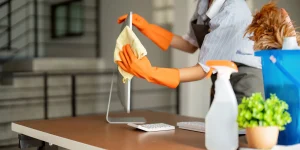
Frequency by Office Size
Cleaning frequency depends on occupancy, traffic flow, and how quickly soils return, not only square footage.
Small offices with limited staff and visitor traffic may operate effectively with fewer weekly visits if food use and shared equipment are minimal.
Mid sized offices with steady staff presence and shared rooms usually require more frequent service to control restrooms, kitchens, and floors where soils build faster.
Large offices with high traffic, shared amenities, and frequent visitors generally require consistent service to manage entrances, washrooms, and high use areas where soil and contact risk return quickly. In these spaces, frequency decisions are driven more by usage patterns than total size.
High-Touch Areas
High touch areas are surfaces that many people contact repeatedly throughout the day. These points carry higher potential for transferring microbes and residues between users.
Key areas include door handles, push plates, elevator buttons, light switches, shared keyboards and mice, printer panels, faucet handles, appliance handles, meeting room tables, and reception counters.
Effective cleaning requires soil removal first, followed by disinfectant use where appropriate for office settings and product label requirements. Overuse of disinfectants without proper surface prep can leave residue and cause complaints without improving outcomes. Cleaning focus in these zones often increases during cold and flu season or when offices have higher visitor turnover.
Shared Spaces and Common Areas
Shared spaces often experience higher and more variable use than individual desks. Meeting rooms, reception zones, lunchrooms, and collaborative areas see multiple users in short periods, which increases soil load and surface contact.
Cleaning in these areas emphasizes table surfaces, chair arms, touch panels, and floor condition. Waste removal and surface wiping in break areas also play a role in reducing odor, pest attraction, and residue buildup that can spread to adjacent spaces.
Restrooms and Kitchen Areas
Restrooms and kitchens represent the highest hygiene control areas within standard offices. These spaces combine moisture, food handling, and frequent contact, which increases the need for consistent cleaning routines.
Restroom standards focus on fixtures, partitions, dispensers, and floors, along with regular restocking and waste removal. Kitchen and break room cleaning focuses on counters, sinks, appliance exteriors, and tables, helping control food residues that attract pests and create surface contamination.
Health Benefits
Consistent office cleaning supports lower exposure to dust, surface residues, and shared contamination points that contribute to discomfort and minor illness spread in offices.
Dust removal helps reduce irritation for occupants with allergies or sensitivities. Clean restrooms, kitchens, and shared surfaces support better hygiene practices among staff. Clean floors and entrances reduce slip incidents linked to moisture and debris.
These benefits relate to general workplace health and comfort, not medical level infection control.
Quality Control and Expectations
Professional office cleaning standards rely on clear task lists, defined frequencies, and regular review of service quality. This often includes checklists, periodic inspections, and communication between the client and cleaning provider to address changes in occupancy or use patterns.
Standards are based on maintaining conditions, not achieving a one time deep clean appearance. Expectations should focus on consistent control of soil, surface condition, and restroom hygiene rather than spotless presentation at every moment.
Scheduling
Scheduling should align with business hours, traffic patterns, and drying time. Cleaning during low occupancy periods reduces disruption and lowers slip risk from recently cleaned floors.
Schedules typically define which tasks occur every visit versus weekly or periodic rotations, so expectations match service scope. Offices with higher visitor traffic, shared equipment, or sensitive staff may require adjustments in frequency, product selection, or timing to maintain comfort while meeting cleaning standards.
Businesses reviewing professional office cleaning in Calgary can use this structure to understand what is included, how often services are needed, and which areas require the most attention. When requirements vary by occupancy or layout, the most accurate approach is to request a site assessment so scope and frequency align with actual workplace conditions.