Industrial cleaning in Winnipeg removes contamination, airborne particulates, and production residue from manufacturing and processing environments. These facilities use large equipment, complex mechanical systems, and controlled production zones, so cleaning functions as an operational task rather than routine janitorial work. Because hazards, schedules, and regulatory duties shape how work occurs, Eshine Cleaning Services delivers industrial cleaning within defined safety and compliance limits suited to these sites.
Industrial Cleaning Safety Standards
Industrial cleaning follows safety frameworks that go beyond office or light commercial requirements, since crews work around machinery, elevations, and process hazards. Therefore, teams follow occupational health and safety rules, lockout and tagout procedures, fall protection requirements, chemical handling standards, and site specific hazard assessments.
These standards control where crews can enter, what protective equipment they wear, and when they can begin work. In addition, many sites require permits and coordination with facility safety officers, so planning must align with internal safety systems before cleaning starts.
| Safety Area | Why It Applies in Industrial Sites | Impact on Cleaning Work |
| Lockout and tagout | Equipment may start or hold stored energy | Teams isolate machinery before nearby cleaning |
| Fall protection | Steel structures, platforms, and mezzanines are common | Crews use approved lifts or harness systems |
| Confined space rules | Tanks, pits, or enclosed process areas may exist | Teams follow entry permits and air testing rules |
| Chemical safety | Residues or products may create exposure risks | Crews use approved products and handling methods |
Typical Industrial Cleaning Tasks
Industrial cleaning scope targets contamination linked to production processes and operational byproducts, so work focuses on surfaces that affect safety, air quality, and equipment surroundings. Common tasks include:
- Removing heavy dust and residue from structural steel, beams, and overhead areas
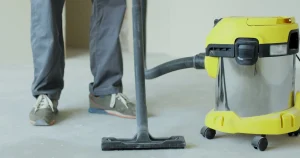
- Cleaning around machinery exteriors where site rules allow access
- Vacuuming and wiping ledges, cable trays, and utility runs
- Cleaning floors in production zones with particulate buildup
- Cleaning walls and surfaces affected by process dust or overspray
- Removing debris related to operations rather than office waste
However, internal machine servicing, hazardous waste remediation, and specialized technical maintenance remain outside standard cleaning scope unless contracts define them separately. More details appear under industrial cleaning services.
Dust Control
Industrial dust behaves differently than common indoor dust, because fine particles can stay airborne longer and travel through air movement. Therefore, crews use capture based methods that prevent redistribution. High filtration vacuums, controlled wiping, and sectional work zones help contain particles at the source.
Teams usually clean from higher to lower surfaces, since this sequence limits recontamination. In addition, ventilation, production activity, and dust type influence the control approach, especially where health risks or combustible dust concerns exist.
Worker Safety
Worker safety depends on site hazards, environmental conditions, and regulatory rules, so crews select protective measures based on specific risks. Teams may use respiratory protection, fall protection systems, cut resistant gloves, eye protection, hearing protection, and protective clothing. Furthermore, sites often require approval and inspection of lifts or scaffolds before crews begin work.
Hazard communication, equipment isolation checks, and restricted zone controls protect both cleaning personnel and facility workers. At the same time, teams plan tasks so cleaning does not create slip hazards, chemical exposure, or interference with active operations.
Scheduling
Industrial cleaning schedules align with production cycles, maintenance windows, and operational downtime, since active processes can increase risk and disrupt work. Therefore, teams often clean during shutdowns, off shift periods, or staged intervals so facilities maintain operations.
Large sites commonly use phased scheduling, because managers can isolate sections while other areas continue production. As a result, coordination between cleaning teams and site management ensures the correct task sequence, hazard control, and minimal conflict with equipment use. For site specific coordination, use the industrial cleaning contact page.